This course offers a comprehensive introduction to the international legal framework governing the use of force and the conduct of hostilities between states. It begins by examining war as a concept in international relations and explores the fundamental principles underlying the prohibition on the inter-state use of force. Students will study the key exceptions to this prohibition, including self-defense and other legally recognized justifications. The course then delves into the law of armed conflict—its history, sources, and the classification of conflicts—alongside the rules governing targeting and conduct during warfare. It further introduces the basics of international criminal law, the protection of human rights in armed conflict, and contemporary challenges such as targeted killings, the use of AI and cyber operations under international law. Drawing on Craig Martin’s notion of the “Laws of War,” the course aims to equip students with an understanding of how international law seeks to balance state sovereignty, security, and humanitarian concerns in times of conflict.
Topics to be covered:
1. Introduction to war as a concept in international relations
2. Introduction to the law on inter-state use of force: the prohibition on the use of force
3. Introduction to the law on inter-state use of force: the concept of self-defense
4. Introduction to the law on inter-state use of force: other exceptions from the prohibition on the use of force
5. Introduction to the law of armed conflict: history and sources, classification of armed conflicts
6. Introduction to the law of armed conflict: law of targeting
7. Introduction to international criminal law: history and current institution
8. Introduction to international criminal law: crimes and the case law of the International Criminal Court
9. Human rights and armed conflict
10. Targeted killings in international law
11. Cyber operations in international law
- Teacher: Bence Kis Kelemen
- Teacher: Mátyás Kiss
- Teacher: István Szijártó
Blended Research Summer School
Unlock the power of cultural understanding at the Intercultural Sensitivity research based summer school at the University of Pécs! Dive into fascinating research on identity, culture, and globalization while collaborating with peers from diverse backgrounds. Enhance your cultural awareness, improve your intercultural communication skills, and gain valuable insights into European cultural diversity. This unique experience will help you build essential skills for successful intercultural cooperation—skills you can apply in your future career. Apply now to expand your horizons and become a global citizen!
- Teacher: Barbara Barbieri
- Teacher: Bíborka Bartis
- Teacher: Ester Cois
- Teacher: Zsuzsa Koltai
- Teacher: Balázs Bánk Németh
- Teacher: Gyöngyi Pozsgai
- Teacher: Christian Rossi
- Teacher: Melinda Szappanyos
- Teacher: Ádám Guld
- Teacher: Péter Uherkovich
- Teacher: Bence Kis Kelemen
- Teacher: István Szijártó
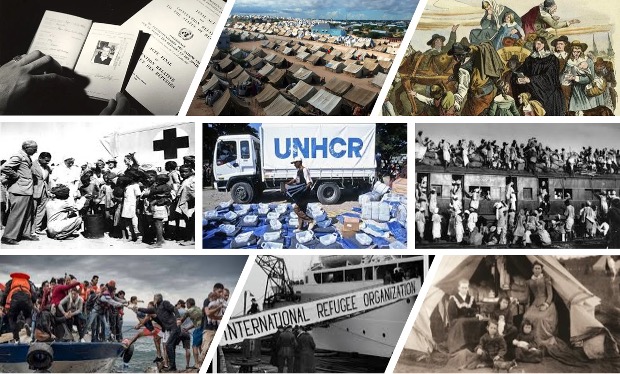
This blended summer school delves into the global history of processes of refuge-seeking. It explores the many challenges that newcomers labeled as refugees and migrants face but also focuses on the opportunities they create in their new home countries. It engages the manifold ways in which citizens have responded to migrants and refugees over time – from the Huguenots’ arrival in Brandenburg-Prussia in 1685 to the present – and in various places, including France, Australia, Uganda, Ethiopia, and Germany. The course aims at opening up a complex vista that explores various actors’ responses to and visions of migration and mobility with a special emphasis on place-making, creation of new homes and local and regional “integration” practices.
The course brings together 25 students from eight European universities through the European Digital UniverCity alliance (EDUC), for three lessons of online learning (starting on April ) and a week together in Potsdam June 1-6, 2026 (classes from Monday to Saturday).
To prepare for this, students will be introduced to theories around integration and will then engage with historic and contemporary case studies that highlight particular issues such as culture, religion, racism, education, and labour in relation to assimilationism and multiculturalism.
- Teacher: Riley Linebaugh
- Teacher: Alejandro Pascual Iranzo
- Teacher: Judith Rode

- Teacher: Monica Heintz